
Reviewed · ADELAIDE WALKING TOURS
Adelaide Walking Tour: Hills, Squares and Parklands
North Adelaide feels like a history lesson you can walk through. This guided tour strings together colonial-era Adelaide and the architecture you still see today, then connects buildings to the people who lived, studied, preached, and ran businesses in them. I love the way the guide ties facts to faces, and I love that you hit about two dozen local landmarks without wasting time. The only real drawback: it’s a steady walk for roughly two hours, so comfortable shoes and a moderate pace matter.
I also like that the tour is built for real viewing, not just moving. You start at the Wellington Hotel in North Adelaide, spend time at each stop, and work back to the same place so you’re never scrambling to find your next clue. If you’re lucky enough to get Graeme, his style is known for bringing the neighborhood’s story to life with a mix of story and straight facts.
At $36.93 per person, this is good value if you care about place and context. You won’t be paying for site entries along the route, but you do need to handle your own getting to the meeting point and decide whether you want a snack before or after (food isn’t included). And yes, it runs in all weather, so pack accordingly.
In This Review
- Quick highlights: what makes this North Adelaide walk click
- Entering North Adelaide with history you can actually see
- The Wellington Hotel kickoff: your starting point and first story
- Wellington Square and the street-level clues in front of you
- Jeffcott Street homes and the shift from private living to institutions
- Kingsmead, Duncraig, and the villas with their difficult stories
- Montefiore Hill and Light’s Vision: the most time-worthy stop
- Carclew and Aquinas College: education and explorer-linked connections
- Christ Church School, Milford House, and the institutions that shaped daily life
- Pace, comfort, and the two-hour reality check
- Price and value: why $36.93 can feel like a steal
- Should you book Adelaide’s Hills, Squares and Parklands walking tour?
- FAQ
- How long is the Adelaide Walking Tour: Hills, Squares and Parklands?
- Where do I meet the tour, and where does it end?
- What time does the tour start?
- How much does the tour cost?
- Is food included in the tour?
- Are there any admission fees for the stops?
- How big is the group?
- What’s the cancellation option if plans change?
- Does the tour run in bad weather?
Quick highlights: what makes this North Adelaide walk click
- Wellington Square start with clear background that helps you understand what you’re looking at
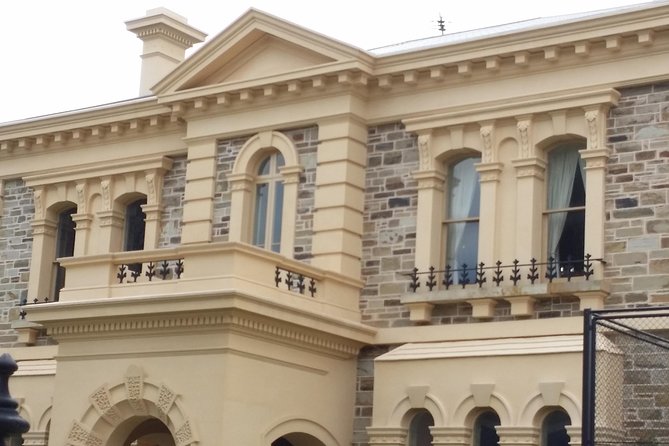
- Architectural details on houses and villas, from cast-iron features to bay-window styles
- Two dozen+ historical stops without turning it into a marathon
- Hilltop history at Montefiore Hill, including William Light and the first public hanging
- Schools, churches, and colleges that show how communities organized their lives
- Small-group feel with a guide who keeps you moving at the right speed
Adelaide at footpace, more routes through town
- Cultural Caper Adelaide Walking Tour★ 5.0 · 122 reviews
- Welcome to Adelaide Walking Tour★ 5.0 · 119 reviews
- Adelaide: City Walking Tour with Guide★ 4.8 · 83 reviews
- Adelaide: Guided Ultimate Walking Tour with Drink and Snack★ 4.9 · 80 reviews
- Adelaide: Dark Secrets and True Crime Walking Tour★ 5.0 · 64 reviews
Entering North Adelaide with history you can actually see
This is the kind of walking tour that helps you read a neighborhood. North Adelaide didn’t grow in a single straight line; it formed through families, institutions, and a steady stream of new arrivals, all leaving physical traces. As you walk, the guide helps you spot what’s architecturally distinctive and then explains why those buildings mattered.
What I like most is the balance between looking and understanding. You’re not just handed dates—you’re shown how houses, hotels, schools, and churches connect to real people. That makes it easier to remember the route, too, because each stop has a purpose beyond a photo op.
Also, the tour gives you a clear structure: you move from one meaningful building to the next, and each one is explained in a short, focused window. That matters in a city with so much to see. In this case, you’re learning something every few minutes, not waiting until the end for the good stuff.
The Wellington Hotel kickoff: your starting point and first story
The walk starts at the Wellington Hotel, right on Wellington Square. The early minutes are designed to get your bearings fast: you get a quick overview of Adelaide and North Adelaide’s development, plus what the tour covers and how long you’ll be out there. Then the guide places the Wellington Hotel itself into that larger story—so it stops being a generic landmark and becomes a reference point.
This is a smart way to begin, because it sets up the neighborhood as a timeline you can follow. Instead of thinking of North Adelaide as just pretty streets, you start noticing patterns: where people lived, what kinds of institutions formed, and how the area’s role changed over time.
If you’re the type who likes to understand a place before you photograph it, this first stop does exactly that. And since the tour ends back at the meeting point, you never feel lost while you’re getting oriented.
Wellington Square and the street-level clues in front of you
After the hotel, you step into Wellington Square to look at shops and surrounding built form. This part is useful because it shows how commercial and everyday life sat alongside more residential architecture. Even if you’re not an architecture buff, you’ll start to recognize recurring features and construction styles.
Then the tour moves through streetside house stories with specifics. You’ll get a look at two-storeyed houses, including places described as Cortina, with the guide discussing who lived there and how that type of home fit into local development. You’ll also hear about a house with cast-iron detailing—one of those features that can look decorative until you learn why it’s there and what it suggests about the era and the people who could afford that kind of craftsmanship.
A nice benefit here is pacing. These are short stops, but they’re long enough for the guide to point out what to watch for—style, materials, and clues about occupants. That turns you into a better observer by the time you hit the more storied sites later.




Jeffcott Street homes and the shift from private living to institutions
From the houses on Jeffcott Street, the tour starts sharpening its focus on ownership and identity—who lived where, and what previous owners did or represented. This is where the neighborhood starts to feel less like an “old part of town” and more like a community with changing roles.
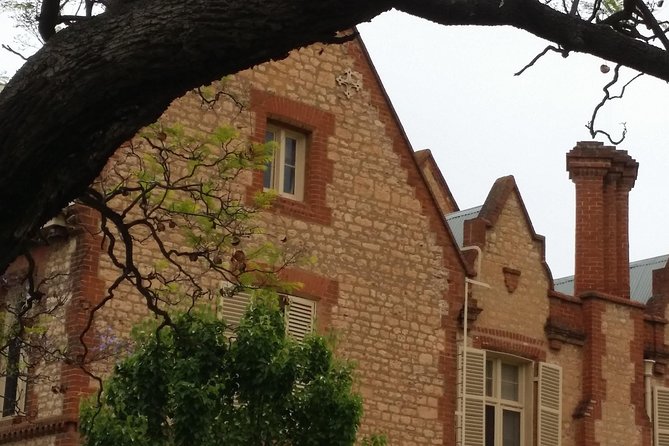
One of the big transitions comes with the Lutheran Seminary, described as the former Whinham College. You’re not just hearing that it used to be a college—you’re getting the history, the architectural context, and the developers of the site. That kind of explanation helps you understand why certain institutional buildings sit where they do, and why their presence signals community priorities.
Nearby, the tour also includes a stop at a Gable House, where you’ll hear a story tied to previous occupants. Even when the details are brief, the pattern is consistent: each building is treated like a document. It has wording in the form of design choices, and it has footnotes in the people who passed through.
Kingsmead, Duncraig, and the villas with their difficult stories
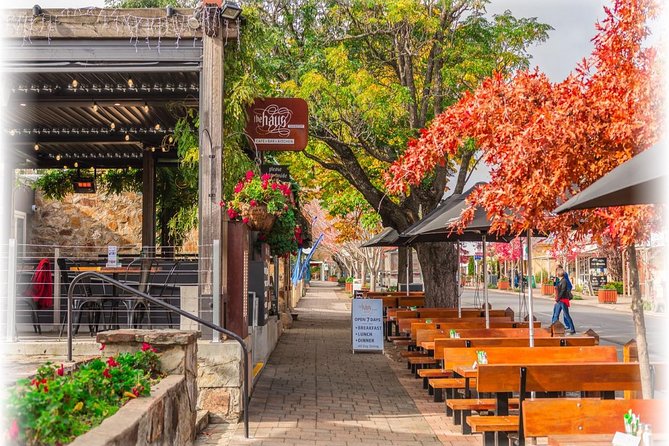
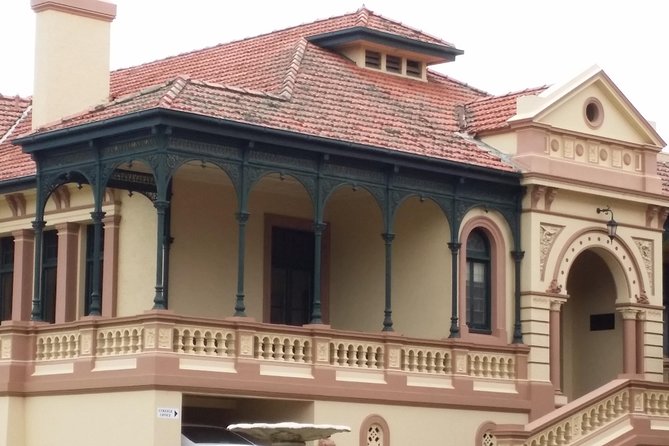
As you continue, the tour highlights Kingsmead and Duncraig, with the guide focusing on design and earlier occupants. This is the period where you’ll likely start spotting what makes North Adelaide’s residential architecture distinct—things like window proportions, rooflines, and how homes were built to signal status.
Then you hit a Victorian bay-windowed villa, with a story connected to its past. The tour notes a suicide story, which the guide frames as part of the building’s history. This kind of inclusion matters, because it keeps the tour honest. Neighborhood history isn’t only about achievements; it also includes personal tragedy, and learning that can change how you see older homes.
Some stops around here are shorter than others, which can be a good thing. In two hours, you need momentum, and the tour keeps moving while still giving you enough context to connect the dots.
Montefiore Hill and Light’s Vision: the most time-worthy stop
If there’s a single moment where this tour gives you a punch of meaning, it’s Montefiore Hill and the stop called Light’s Vision. The guide explains the history of the site and brings in Colonel William Light, including a detail about the first public hanging.
This isn’t just a trivia stop. It’s a reminder that Adelaide’s story includes strong characters and serious consequences, not just careful planning and pleasant streets. Even if you already know Light’s role in Adelaide’s founding, the way the tour links him to a specific landmark makes the history feel more grounded in place.
This is also a hill stop, so expect some change in elevation as you move. If you’re watching your step, take your time when the ground slopes and give yourself a moment to look around. A hill like Montefiore helps you understand why cities build where they do, and how visibility and prominence shaped what people wanted others to notice.
Carclew and Aquinas College: education and explorer-linked connections

After the hill, the tour returns to story-driven sites linked to community life. Carclew is part of the walk with history of the house and occupants, including a connection with a famous explorer. The name alone might not ring a bell for everyone, but the guide’s job is to connect those dots—how a home becomes tied to a bigger narrative through the person associated with it.
Then you’ll reach Aquinas College, where the focus is on the site’s history and previous and current use. Hearing about a college in the context of the neighborhood helps you see schooling as part of how Adelaide functioned over time. Schools and colleges don’t just teach; they shape local development because families organize around them.
If you’re traveling with teens or younger adults, this section often lands well. Even if they’re not fascinated by architecture, the idea that education buildings are long-running community anchors usually clicks.
Christ Church School, Milford House, and the institutions that shaped daily life
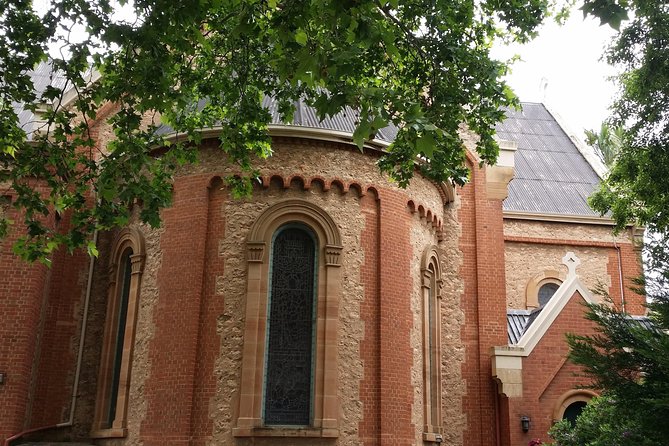
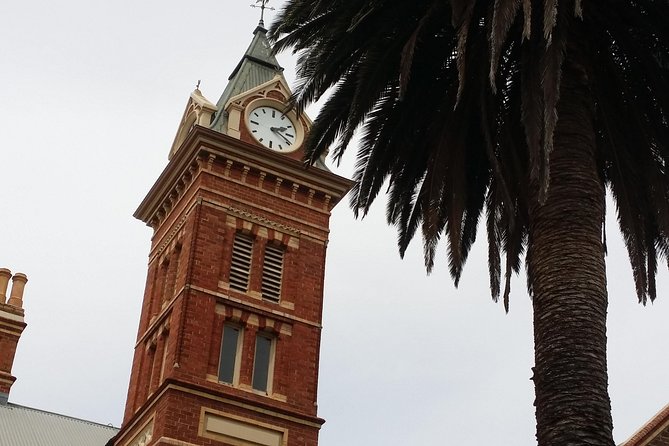
The walking route includes twin cottages, then a stop at the former Christ Church School, where you’ll hear the history and architectural angle. School buildings are often easy to overlook when you’re just passing by, but this stop helps you understand why they existed in that form and what they meant to the neighborhood.
A nearby highlight includes a stop at a previously Milford House Private Hotel. Here you get a story of the site’s development and associated occupants. This is a helpful reminder that hotels weren’t only for tourism—they were practical hubs. Places where people stayed often became places where people learned each other’s names, where business happened, and where the neighborhood connected to wider networks.
You end this part of the walk with another stop tied to religious community life: the former Primitive Methodist Church. The guide covers history and how the building has been used, and that creates a clear sense of how religious institutions evolved as the community’s needs shifted.
Pace, comfort, and the two-hour reality check
This tour is about two hours and covers roughly two dozen historical sites. Each stop is timed to keep things moving, so you won’t linger for long chats at every corner. That’s actually a benefit—if you’re on vacation, you don’t want your day eaten by one slow location.
You also need a moderate fitness level. You’re walking through a neighborhood, with some elevation near Montefiore Hill, and the tour runs in all weather. Bring shoes you trust on streets, and dress for rain or sun even if the forecast looks friendly.
Small group size is another practical plus. It’s capped at a maximum of 15 people per booking, with a stated maximum of 20 travelers. Either way, that keeps the guide’s attention focused and helps you ask questions without getting ignored.
If you’re traveling with kids, they must be accompanied by an adult. The tour isn’t presented as a stroller event, and shorter attention spans will likely struggle with the many story-based stops, so plan accordingly.
Price and value: why $36.93 can feel like a steal
At $36.93 per person, you’re paying for a guided route, not just a walk. And the guide does real work: they connect architecture to occupants, buildings to historical figures, and institutional sites to community development. That’s the difference between seeing old buildings and understanding why they exist.
You also get value in how the sites are handled. The tour includes stops where admission is listed as free, which means you’re not stacking up extra costs on top of the base ticket. Add to that the no-food, no-transport reality—there’s nothing extra to buy during the tour—and you can plan your day without surprise expenses.
The only costs you’ll likely control are the ones you bring with you: getting yourself to the meeting point and deciding whether you want something to eat before or after. Since there’s no hotel pickup or drop-off, you’re also in control of your own schedule around the 10:00 am start time.
Should you book Adelaide’s Hills, Squares and Parklands walking tour?
Book this if you want a guided, story-led introduction to North Adelaide’s architecture and history. It’s especially good if you like learning why buildings look the way they do and hearing how real residents and historical figures connect to specific locations. The most praised part of the experience is how the guide brings history alive, and if you get Graeme, you can expect a mix of story and factual detail that makes the whole route easier to remember.
Skip it or think twice if you need a super relaxed pace or lots of time for wandering without instruction. You’ll be moving and listening, and you’ll cover a lot of stops in a short window. Also, because it operates in all weather and requires moderate walking, it’s not the best choice if you’re hoping for an easy day with minimal footwear effort.
If your idea of a great day in Adelaide is turning streets into stories, this is a smart use of two hours.
FAQ
How long is the Adelaide Walking Tour: Hills, Squares and Parklands?
It’s approximately 2 hours.
Where do I meet the tour, and where does it end?
Meet at the Wellington Hotel, 36 Wellington Square, North Adelaide SA 5006. The tour ends back at the meeting point.
What time does the tour start?
The start time is 10:00 am.
How much does the tour cost?
The price is $36.93 per person.
Is food included in the tour?
No. Food and drinks are not included.
Are there any admission fees for the stops?
Admission for the listed sites is shown as free for the stops on the route.
How big is the group?
There is a maximum of 15 people per booking, and the activity has a maximum of 20 travelers.
What’s the cancellation option if plans change?
Free cancellation is available. You can cancel up to 24 hours in advance for a full refund.
Does the tour run in bad weather?
Yes, it operates in all weather conditions, so dress appropriately.
More Tours in Adelaide
- Barossa Premium Wine Tasting Tour & lunch Departs 7 days a week
★ 5.0 · 1,475 reviews - Adelaide: Barossa Premium Wine Tasting tour & Winery Lunch
★ 4.8 · 1,452 reviews - Adelaide Oval Stadium Guided Tour
★ 4.8 · 760 reviews - Kangaroo Island in a Day Tour from Adelaide
★ 4.5 · 722 reviews - Adelaide: Dolphin Sanctuary Eco Kayaking Tour
★ 4.5 · 560 reviews
More Tour Reviews in Adelaide
- Barossa Premium Wine Tasting Tour & lunch Departs 7 days a week
★ 5.0 · 1,475 reviews - Adelaide: Barossa Premium Wine Tasting tour & Winery Lunch
★ 4.8 · 1,452 reviews - Discover Barossa: 4 Wine Tastings, Gourmet Lunch, and Hidden Gems
★ 5.0 · 1,027 reviews - Adelaide: River Torrens Popeye Sightseeing Cruise
★ 4.6 · 949 reviews - From Adelaide: Barossa to Hahndorf Wine Tasting and Lunch
★ 4.6 · 877 reviews
Adelaide on Foot
- Ultimate Adelaide Walking Tour
★ 5.0 · 222 reviews - Cultural Caper Adelaide Walking Tour
★ 5.0 · 122 reviews - Welcome to Adelaide Walking Tour
★ 5.0 · 119 reviews - Adelaide: City Walking Tour with Guide
★ 4.8 · 83 reviews - Adelaide: Guided Ultimate Walking Tour with Drink and Snack
★ 4.9 · 80 reviews
Just Added: Fresh Adelaide Reviews



Adelaide Walking Tours, compared.
 ★ 5.0Ultimate Adelaide Walking Tour222 reviews
 ★ 5.0Cultural Caper Adelaide Walking TourFrom $36122 reviews
 ★ 5.0Welcome to Adelaide Walking TourFrom $28119 reviews
 ★ 4.8City Walking Tour with GuideFrom $3183 reviews
 ★ 4.9Guided Ultimate Walking Tour with Drink and SnackFrom $5280 reviews
 ★ 5.0Dark Secrets and True Crime Walking TourFrom $3564 reviews
 ★ 5.0Koala Walking Tour in Kangaroo IslandFrom $5556 reviews
 ★ 5.0Around the Square Adelaide Walking TourFrom $3650 reviews
Browse the lists this tour appears in