
Reviewed · ADELAIDE HILLS & HAHNDORF TOURS
Jurlique Farm Tour
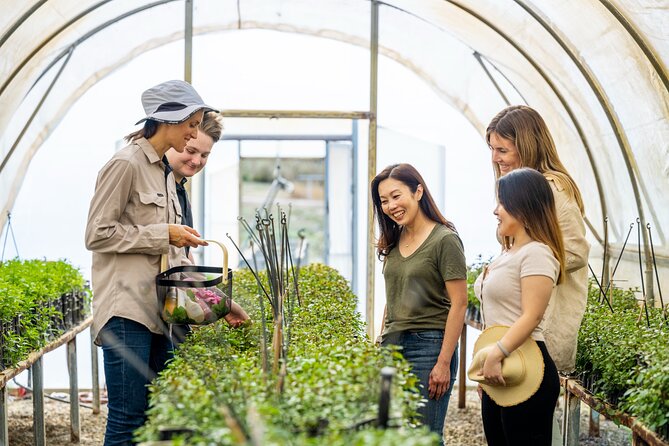
Skincare starts with dirt here in Adelaide Hills. You’ll walk a biodynamic farm with a Jurlique Ambassador and learn how seedlings, soil, and harvesting feed the products you use, plus you might get to try a few products in the garden. The only snag: transfers aren’t included, so plan your own ride to the meeting point.
The tour runs about 90 minutes and keeps to a manageable pace, with a maximum group size of 50. A mobile ticket makes check-in easy and fuss-free.
For $28.69 per person, it’s a smart way to spend part of a day in the hills if you like gardening, nature, or the real story behind skincare ingredients. You’ll leave with a clearer picture of what biodynamic farming looks like in practice.
In This Review
- Key highlights you can’t miss
- Jurlique Farm in the Adelaide Hills: what you’re actually walking into
- A 90-minute plan built around the whole plant-to-product story
- Start with Jurlique’s origin and why biodynamic matters
- Seedlings and plant propagation: how the growing starts
- Plant varieties and their uses: the farm as an ingredient library
- Biodynamic farming principles, explained in real decisions
- Soil fertility and compost production: the backbone of the operation
- Harvest process: seeing how the timeline works
- The garden moments: hands-on learning and product testing
- Who should go (and who might want a different day plan)
- Price and value: is $28.69 a fair deal?
- Tour pace, group size, and how to make the most of it
- Practical tips: meeting point, transport, and what to expect on arrival
- Should you book the Jurlique Farm Tour?
- FAQ
- How long is the Jurlique Farm Tour?
- What’s included in the price?
- Do I need to arrange transfers?
- Where does the tour start?
- Will I use a mobile ticket?
- How big is the group?
- Are service animals allowed?
- Can I cancel for a full refund?
Key highlights you can’t miss
- Biodynamic farming, explained where it happens (seedlings, soil fertility, compost, and planting methods)
- Plant varieties and their uses tied back to what goes into skincare
- Soil and compost production shown as part of the skincare supply chain
- A friendly guided experience led by a Jurlique Ambassador, including tours led by Lexi
- Garden moments that feel hands-on, including time to sample a few products in the garden
Up the freeway to Hahndorf, more hills days
- From Adelaide: Barossa to Hahndorf Wine Tasting and Lunch★ 4.6 · 877 reviews
- Barossa Valley Inc Maggie Beers & Hahndorf (German Village)★ 4.5 · 467 reviews
- Experience Hahndorf & Barossa: Gourmet lunch, Wine, Beer & Treats★ 5.0 · 286 reviews
- Small Group Adelaide Hills and Hahndorf Hideaway Tour from Adelaide★ 5.0 · 197 reviews
- Adelaide Hills and Hahndorf Half-Day Tour from Adelaide★ 4.5 · 185 reviews
Jurlique Farm in the Adelaide Hills: what you’re actually walking into
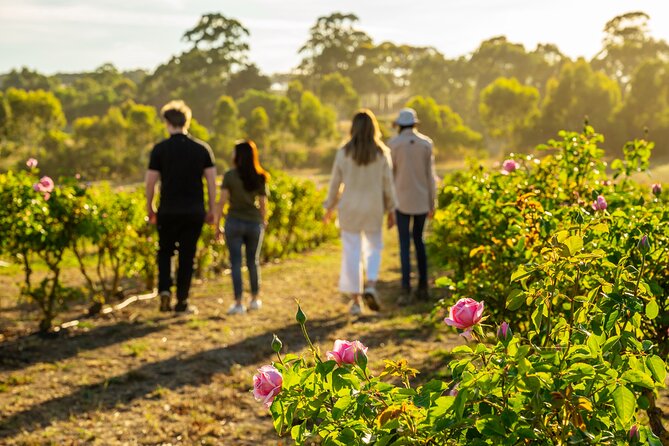
Jurlique’s farm tour is not a quick showroom stop. You’re in South Australia’s Adelaide Hills, at a working biodynamic farm that’s been growing plants for more than 35 years for use in their natural skincare products. That matters, because the tour focuses on how ingredients are grown, prepared, and harvested—not just how the final product looks.
The setting helps, too. Even if you’re not a die-hard gardener, you’ll be surrounded by plants and farming activity you can see for yourself. It’s the kind of place where the questions in your head—Where do these ingredients come from? How do you keep soil healthy?—start getting answered fast.
A 90-minute plan built around the whole plant-to-product story
This experience is set up as a single guided farm tour at Jurlique Farm, running about 1 hour 30 minutes. You’ll go through the full arc: history, how plants are propagated, what varieties are grown and why, and how biodynamic principles shape farming decisions.
The pace is designed to be easy to follow. In a larger group, the structure keeps you included rather than floating at the edge. I like this approach for tours like this: you get guidance, but you’re still moving through the farm at a human speed.
Start with Jurlique’s origin and why biodynamic matters
The tour begins with the history of Jurlique, which gives context for what you’re about to see. Then you shift into biodynamic farming principles, framed in practical terms. Instead of sounding like a lecture, it’s more like a map for how to look at the plants and soil around you.
This is where the tour becomes useful even if you don’t know much about farming. You start learning what to watch for—seedlings, compost behavior, soil fertility—so the rest of the walk feels connected rather than random.
Worth lining up before you book this Adelaide tour:

Seedlings and plant propagation: how the growing starts
Next up is how seedlings and plants are propagated. This is one of those stops that can feel boring in a photo—but on-site, it clicks. You’re watching the early steps that decide what kind of plants will eventually end up in the fields and gardens.
If you like learning how systems work, you’ll probably enjoy this section the most. It answers the big question behind good ingredients: you don’t only harvest at the end, you plan the whole process from the start.
Plant varieties and their uses: the farm as an ingredient library
Then the tour moves to plant varieties and their uses. This is where a skincare fan and a nature fan can meet in the middle. You see that the farm isn’t just growing “pretty plants.” Different varieties are grown with purpose, and the guide connects them to the products you’re familiar with.
It also makes your next stop—garden displays—more meaningful. When you already know what a plant is used for, you’ll notice details you would otherwise miss.
Biodynamic farming principles, explained in real decisions
The biodynamic portion isn’t vague here. You get explanations of biodynamic farming principles as they relate to cultivation and care. The point is to help you understand why the farm is managed the way it is, not just to name-check techniques.
This is valuable because many people hear “biodynamic” and treat it like a buzzword. A guided farm walk helps you translate it into what you can actually observe and ask about while standing in the rows.
Soil fertility and compost production: the backbone of the operation
One of the most practical parts of the tour covers soil fertility and compost production. This is the engine room. Healthy soil isn’t just a farming talking point—it’s what supports plant health and repeatable growth over time.
When the guide explains compost production, you’ll likely start thinking about it differently. Instead of imagining a mysterious process, you see it as a deliberate system for feeding soil life and maintaining fertility.
Harvest process: seeing how the timeline works
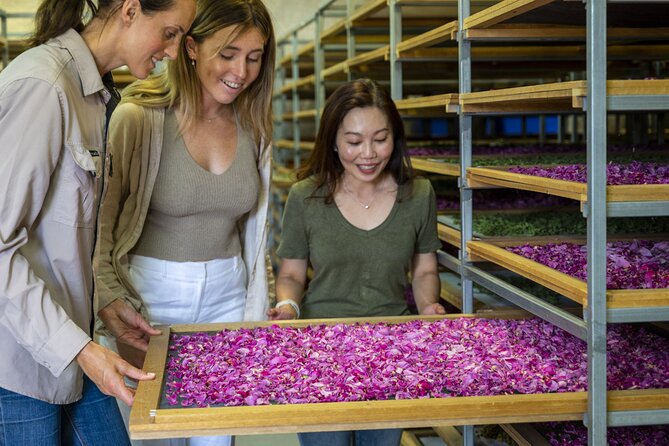
The tour ends with the harvest process. Even though the farm is always growing, harvest is the moment where planning meets action. You learn what harvest means in this context and how the farm’s methods connect to the end goal: consistent, high-quality plant material for skincare.
This part is also where the tour feels most satisfying. You get a full loop: start with propagation, keep soil strong, grow the right varieties, then harvest at the right time.
The garden moments: hands-on learning and product testing
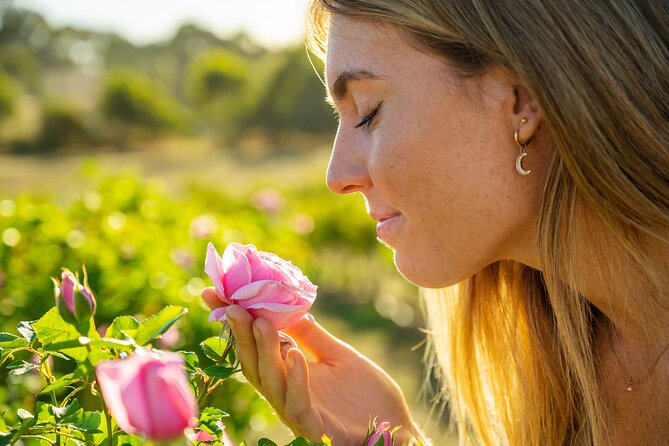
The experience includes a look at Jurlique’s garden areas and how botanicals are used. One of the standout details from recent visitors is that the tour feels interactive, with garden time that supports learning rather than rushing past plants.
A couple of reviews specifically mentioned getting to try a few products in the garden. That’s a smart touch because it links the theory back to the results you’ll notice at home. You don’t just hear about plants; you also get a sensory reminder of what the process aims to deliver.
If you’re into skincare, this portion helps you connect ingredient origins to how products fit into daily use. If you’re more into plants than products, it still works as a way to keep your attention on what you’re seeing and why it matters.
Who should go (and who might want a different day plan)
This tour is a great match if you:
- enjoy guided nature walks with clear explanations
- like skincare ingredients and want the behind-the-scenes version
- want a calm activity in the Adelaide Hills that’s not just sightseeing
You might be less thrilled if you want a long, free-roaming farm experience with lots of unstructured time. The tour is guided and planned, and you’ll move through the main themes on schedule. It’s designed to teach, not to offer a DIY wandering day.
Also, it’s about balance. It’s not marketed as an extreme “farm work” experience. It’s more of an informative guided look at how an established biodynamic farm operates.
Price and value: is $28.69 a fair deal?
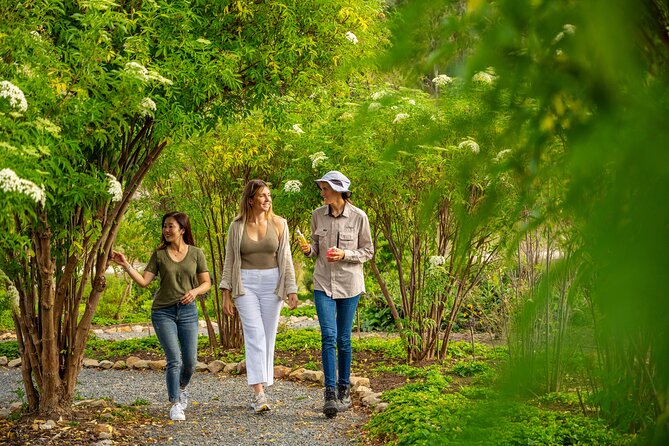
At $28.69 per person, you’re paying for a structured 90-minute guided tour with a Jurlique Ambassador. That price point is reasonable for the mix of content you get: history, biodynamic principles, propagation, soil and compost production, plant variety uses, and the harvest process.
Here’s how I think about value for tours like this: you’re buying clarity. If you walk into the experience with questions like Where do these ingredients come from? you leave with a direct answer in plain language and visible steps.
And the group size matters, too. With a cap of 50 travelers, the tour won’t feel like a stadium event. You’re not going to be lost in a crowd, and that helps with questions and pacing.
If you’re already spending time in Adelaide Hills, this is also the kind of add-on that won’t eat your whole day. One hour 30 minutes fits well between meals, winery stops, or other outdoor plans.
Tour pace, group size, and how to make the most of it
With a maximum of 50 travelers, you’ll likely find it easy to stay with the group and hear explanations without shouting. The tour structure also helps solo visitors feel included. One review highlighted that even in a larger group, the experience felt welcoming and the pacing worked well for different attention levels.
My practical advice: bring your questions. If you care about skincare, ask how specific plants connect to products. If you care about farming, ask about soil fertility and compost production—those topics can lead to helpful explanations fast.
Also, don’t treat this as a sprint. You’ll get the most when you slow down just enough to look at the plants and follow the guide’s logic. The farm isn’t a set-piece; it’s a working system, and it helps to let it reveal itself at human speed.
Practical tips: meeting point, transport, and what to expect on arrival
The tour meets at Jurlique Farm, 31 Liebelt Rd, Biggs Flat SA 5153, Australia. The tour ends back at the meeting point, so you don’t need to plan a second location.
Transfers are not included. That’s the main practical drawback to plan around. If you’re staying in Adelaide city, you’ll want to arrange your own transport or combine the farm visit with other nearby Adelaide Hills stops.
You’ll receive confirmation at booking time, and you’ll use a mobile ticket for entry. Service animals are allowed, and the tour states that most travelers can participate—so in general, it’s approachable for a wide range of visitors.
What to bring? Stick to the basics for an outdoor garden tour: comfortable shoes, sun protection, and water. The tour is only 90 minutes, but you’ll be standing and walking through farm areas.
Should you book the Jurlique Farm Tour?
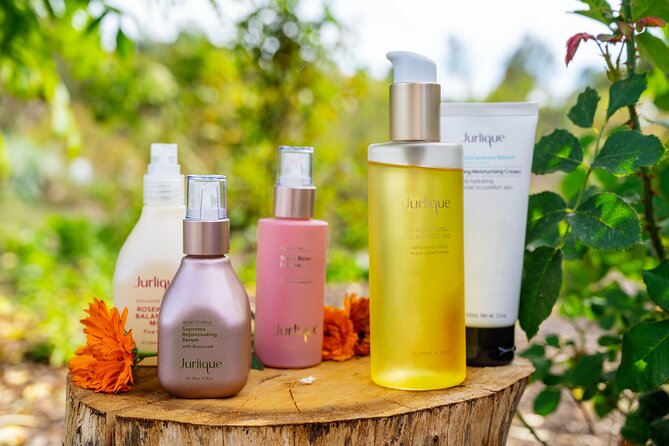
If you care about how skincare ingredients are grown, I’d book it. The tour’s biggest strength is that it connects the biodynamic farm directly to what you end up buying in stores. You get practical farm topics—seedlings, plant varieties, soil fertility, compost, and harvest—explained in a way that makes sense even if you’re new to farming.
It’s also a good value play. At $28.69 for a guided 90-minute experience, it’s an affordable, low-stress way to learn something real in the Adelaide Hills.
Book it if you want a calm, guided day with garden time and clear explanations. Skip it if you want long unguided freedom or you’re not interested in farming and botanical processes at all.
FAQ
How long is the Jurlique Farm Tour?
It runs for about 1 hour 30 minutes.
What’s included in the price?
A 90-minute guided farm tour with a Jurlique Ambassador is included.
Do I need to arrange transfers?
Transfers to and from the meeting point are not included.
Where does the tour start?
The meeting point is Jurlique Farm, 31 Liebelt Rd, Biggs Flat SA 5153, Australia.
Will I use a mobile ticket?
Yes, the tour offers a mobile ticket.
How big is the group?
The tour has a maximum of 50 travelers.
Are service animals allowed?
Yes, service animals are allowed.
Can I cancel for a full refund?
Yes. You can cancel up to 24 hours in advance for a full refund.
More Tours in Adelaide
- Barossa Premium Wine Tasting Tour & lunch Departs 7 days a week
★ 5.0 · 1,475 reviews - Adelaide: Barossa Premium Wine Tasting tour & Winery Lunch
★ 4.8 · 1,452 reviews - Adelaide Oval Stadium Guided Tour
★ 4.8 · 760 reviews - Kangaroo Island in a Day Tour from Adelaide
★ 4.5 · 722 reviews - Adelaide: Dolphin Sanctuary Eco Kayaking Tour
★ 4.5 · 560 reviews
More Tour Reviews in Adelaide
- Barossa Premium Wine Tasting Tour & lunch Departs 7 days a week
★ 5.0 · 1,475 reviews - Adelaide: Barossa Premium Wine Tasting tour & Winery Lunch
★ 4.8 · 1,452 reviews - Discover Barossa: 4 Wine Tastings, Gourmet Lunch, and Hidden Gems
★ 5.0 · 1,027 reviews - Adelaide: River Torrens Popeye Sightseeing Cruise
★ 4.6 · 949 reviews - From Adelaide: Barossa to Hahndorf Wine Tasting and Lunch
★ 4.6 · 877 reviews
Up in the Hills at Hahndorf
- From Adelaide: Barossa to Hahndorf Wine Tasting and Lunch
★ 4.6 · 877 reviews - Barossa Valley Inc Maggie Beers & Hahndorf (German Village)
★ 4.5 · 467 reviews - Adelaide Hills Tour with River Murray Lunch Cruise
★ 4.5 · 374 reviews - Experience Hahndorf & Barossa: Gourmet lunch, Wine, Beer & Treats
★ 5.0 · 286 reviews - Small Group Adelaide Hills and Hahndorf Hideaway Tour from Adelaide
★ 5.0 · 197 reviews
Just Added: Fresh Adelaide Reviews

Adelaide Hills & Hahndorf Tours, compared.
 ★ 4.6From Adelaide: Barossa to Hahndorf Wine Tasting and LunchFrom $114877 reviews
 ★ 4.5Barossa Valley Inc Maggie Beers & Hahndorf (German Village)From $128467 reviews
 ★ 4.5Adelaide Hills Tour with River Murray Lunch CruiseFrom $135374 reviews
 ★ 5.0Experience Hahndorf & Barossa: Gourmet lunch, Wine, Beer & TreatsFrom $121286 reviews
 ★ 5.0Small Group Adelaide Hills and Hahndorf Hideaway Tour from AdelaideFrom $175197 reviews
 ★ 4.5Adelaide Hills and Hahndorf Half-Day Tour from AdelaideFrom $71185 reviews
 ★ 4.5From Adelaide: Adelaide Hills, Hahndorf & Mount Lofty TourFrom $70165 reviews
 ★ 5.0Adelaide Hills & Hahndorf Hop-On Hop-Off Wine TourFrom $71136 reviews
Browse the lists this tour appears in