Reviewed · MCLAREN VALE WINE TOURS
d’Arenberg: The Blending Bench Experience
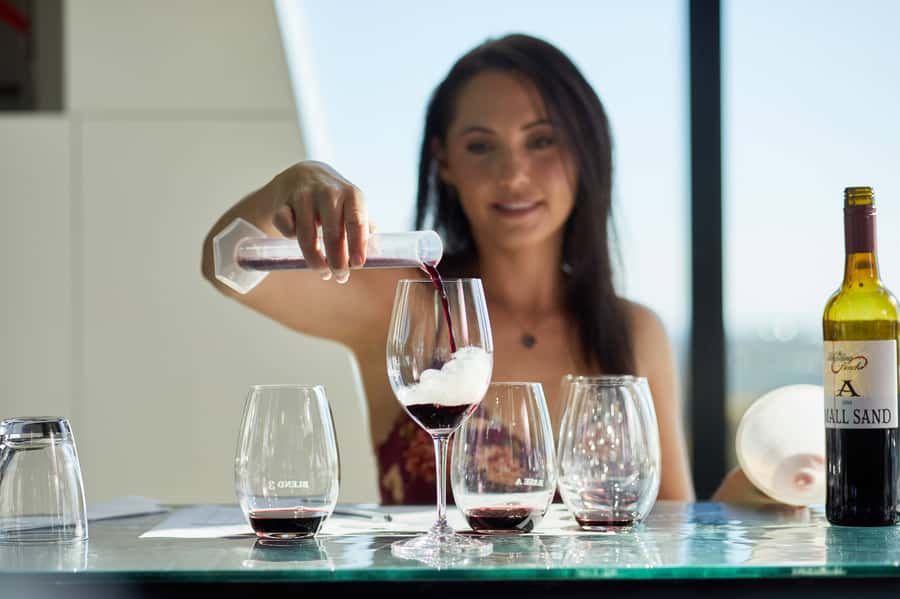
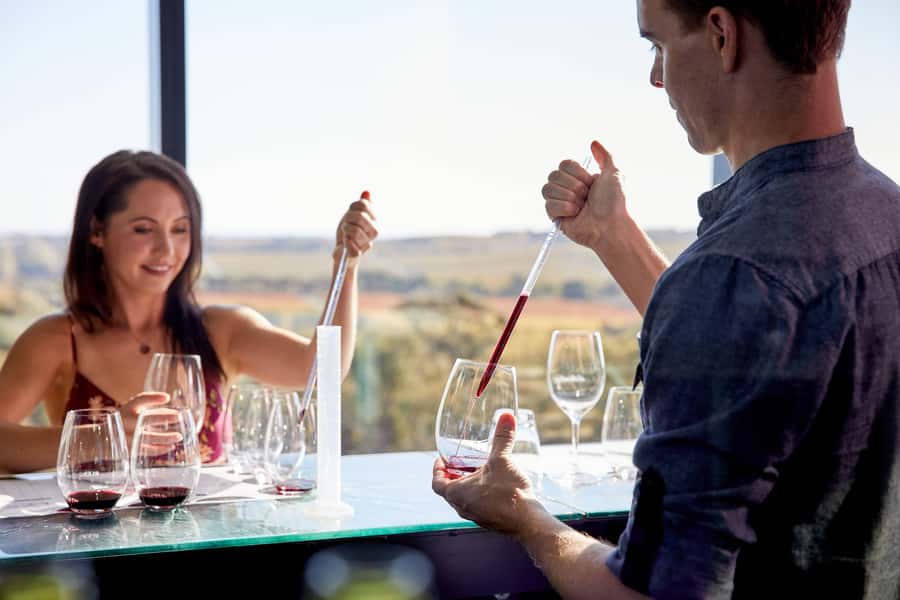
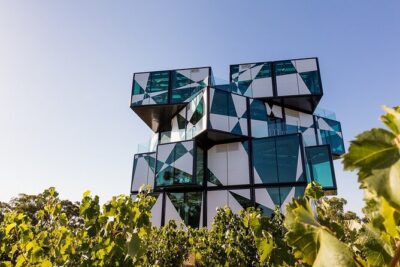
Make wine your way in McLaren Vale. Step into d’Arenberg’s lab-like setting at the d’Arenberg Cube and work through a hands-on blending session where wine parcels get matched for balance, fullness, and finesse—no snobby stuff, just practical fun and real wine decisions. I like that the heavy lifting is already done for you, so you can focus on what matters most: how different flavors and textures behave in a blend. One thing to consider: this is strictly 18+ (alcohol is served), so it won’t work for kids.
What I really love is the payoff. After you craft your blend, you bottle it, then name and label a 750ml sample you can take home. And once the bench session wraps, you still get time to explore the d’Arenberg winery grounds around McLaren Vale’s rolling hills.
In This Review
- Key highlights you’ll care about
- Entering the d’Arenberg Cube: your start point in McLaren Vale
- The 1.5-hour Blending Bench: what you actually do
- How wine parcels become your blend (and why texture matters)
- Tasting lessons that go beyond sipping
- Your 750ml bottle: name it, label it, take it home
- After the bench: exploring d’Arenberg Winery grounds
- Price and value: what $84 buys you (and why it’s not just a tasting)
- Who this experience suits best (and who it may not)
- Practical tips before you go
- Should you book the d’Arenberg Blending Bench?
- FAQ
- How long is d’Arenberg The Blending Bench Experience?
- What’s included in the price?
- What’s the meeting point?
- What’s the minimum age to join?
- How many people are in each class?
- Do I need to bring ID?
- Is it wheelchair accessible?
- Can I cancel if my plans change?
- Are transfers included?
- Is smoking allowed?
Key highlights you’ll care about
- A true winemaker-style blending bench where you combine different parcels by taste and texture
- Pre-prepared wine components means you do the creative blending, not the crushing and fermenting
- Bottle, name, and label your own 750ml sample to take home
- Small groups (2 to 14) so you’re not lost in a crowd
- English-led instruction designed to help you learn how to see, smell, and taste wine
- Add-on time at d’Arenberg Winery grounds right after blending
Grenache down by the gulf, a few more McLaren Vale days
- McLaren Vale North Hop-On Hop-Off Wine Tour★ 5.0 · 251 reviews
- McLaren Vale Small Group Wine Tour★ 5.0 · 130 reviews
- Luke’s McLaren Vale Wine Tour★ 5.0 · 76 reviews
- McLaren Vale North: Hop-On Hop-Off Tour★ 4.9 · 61 reviews
- Small Group McLaren Vale and The Cube Experience★ 4.5 · 52 reviews
Entering the d’Arenberg Cube: your start point in McLaren Vale
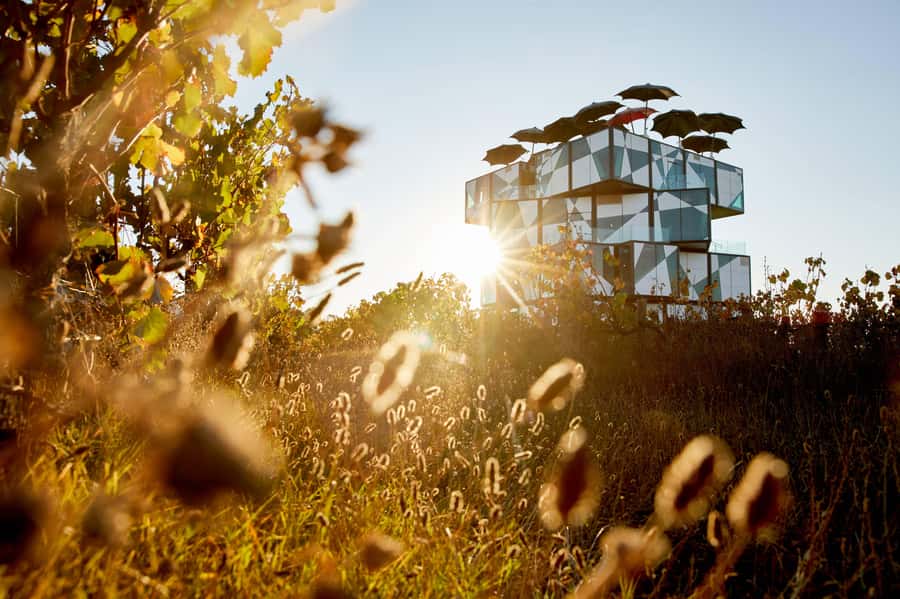
Your experience begins at the Concierge at the front entrance of the d’Arenberg Cube. That matters more than it sounds. This isn’t a vague “meet by reception somewhere” situation—you’ll know exactly where to go, which keeps the experience smooth right from the first minute.
The setting is part of the draw. You’re going from regular winery tasting mode to something closer to a working lab, where you can slow down, pay attention, and make choices. That’s where this experience beats many standard tastings: you’re not just sampling someone else’s decisions. You’re making the call on what ends up in your glass.
Also, the whole session is designed around English-speaking groups, so you can follow along without feeling like you’re guessing. If you’re the type who enjoys being “taught while you do,” this format tends to click fast.
The 1.5-hour Blending Bench: what you actually do
The heart of the day is the 1.5-hour blending class. You’re given a palette of wine parcels, each with its own flavors and textures. Think of it like building a recipe, but with sensory adjustments instead of measured-for-you kitchen steps.
Here’s the big practical point: the team has already completed the parts that take the most time and equipment—things like picking, crushing, fermenting, foot treading, basket pressing, and barrel ageing. That’s not just trivia. It changes your role. You aren’t running a winery. You’re refining a blend with your palate.
In the blending process, you’re looking for:
- Balance (so the wine doesn’t lean too hard in one direction)
- Fullness (so it feels satisfying rather than thin)
- Finesse (so it stays elegant, not just heavy)
This is why the experience feels like a hands-on learning class. You get to make decisions, then taste the outcome and adjust.
How wine parcels become your blend (and why texture matters)
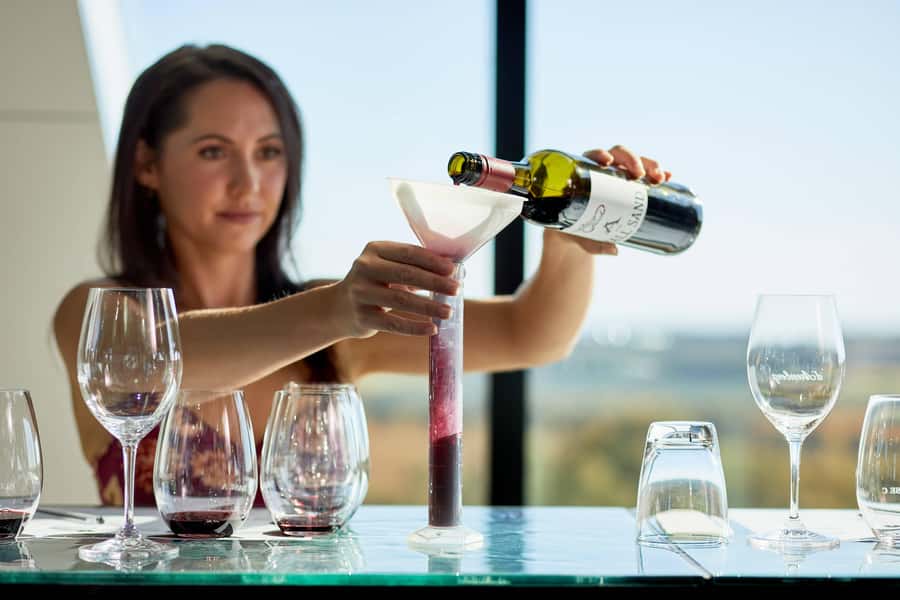
Most people think wine blending is just about choosing a “flavor.” In real life, it’s also about structure—how the wine feels, moves, and finishes. At the bench, you get trained to pay attention to that.
You’ll work with parcels that differ in texture as well as flavor. That’s a key detail because texture is where blends often win or miss. Two wines can taste similar on first sip, but one might feel smooth and rounded while the other feels tighter or more angular. Your job is to combine them so the overall result feels right.
From the way the class is described, you’re not expected to be a sommelier. You’re learning a simple method for evaluating:
- how the wine looks
- how it smells
- how it tastes
- and how it comes together as you blend
One of the best pieces of feedback I’ve seen tied to this experience is how it helps people use a mix of reasoning and senses. Even if you’re more “casual wine drinker” than “wine nerd,” you’ll find yourself making small adjustments and learning why they work.
Tasting lessons that go beyond sipping
A lot of wine experiences stop at: taste, smile, move on. This one trains your attention.
You get guidance that helps you learn how to see, smell, and taste wine in a way that supports blending. That means you’re not just tasting for pleasure—you’re tasting for information. You learn what to notice so you can adjust the blend toward your preferences.
That’s also why it’s a fun activity for groups with mixed interests. If someone is more math-and-logic oriented, they’ll enjoy the pattern of comparing parcels. If someone is more sensory and social, they’ll enjoy the tasting and discussion. The experience gives both a way in.
And because the group size caps at 14, it tends to feel like you can actually ask questions and get feedback, instead of racing through stations.
Your 750ml bottle: name it, label it, take it home
The best souvenir isn’t a shirt or a branded glass. It’s a bottle you made.
After the blending session, you bottle your wine and then name and label a 750ml sample. This is where the experience becomes personal. You’re not just taking home a free pour. You’re taking home the result of your choices—and a label that makes it feel like a real product.
The 750ml format matters because it’s a genuinely drinkable size. You can bring it to dinner, serve it for a birthday, or save it for later. Either way, you’ll feel more ownership than you would with tiny tasting samples.
If you want a “wow” moment for family or friends, this is it: you can explain what you made and why, because the class trains you to talk about flavor and texture—not just name a grape.
After the bench: exploring d’Arenberg Winery grounds
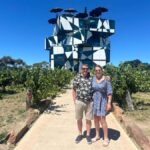
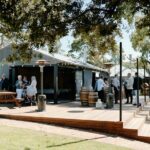
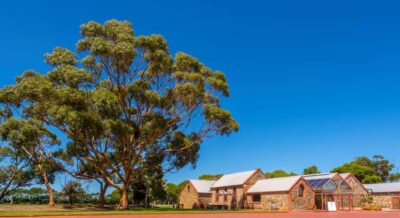
Once the blending bench part is finished, you get time to explore the renowned d’Arenberg Winery grounds. The setting is in McLaren Vale, with rolling hills that give the winery a sense of place.
This portion is less about instruction and more about atmosphere. It’s a good chance to slow down, take photos, and soak up how the winery sits in the region. It also helps break up the intensity of the bench session; you go from concentrating on wine structure to relaxing with scenery and walking space.
Price and value: what $84 buys you (and why it’s not just a tasting)
At $84 per person for a total 2-hour experience, you’re paying for a guided, hands-on class plus a take-home bottle.
Here’s how I’d judge the value:
- Time + skill-building: The session isn’t just sipping; it’s learning how blending works by taste and texture.
- Small-group feel: With a maximum of 14 people, you’re less likely to be ignored.
- A real take-home product: The included 750ml bottle means the experience has a tangible payoff.
Compared with many “tasting + souvenir” outings, the cost makes more sense because you leave with something you personally created. It’s closer to a workshop than a basic cellar door stop.
Who this experience suits best (and who it may not)
This works best if you enjoy doing something with your hands and senses. It’s a strong choice if you:
- like interactive experiences more than passive tours
- enjoy learning through tasting
- want a memorable, personal souvenir
- are planning a group day in McLaren Vale
It can also be a good “family adult outing” style activity for groups where everyone is old enough to drink and wants something more interesting than a standard tasting flight.
But there’s a clear limit: it’s not suitable for children under 18. And because alcohol is served, you need to plan accordingly if you’re traveling with a mixed-age group.
Practical tips before you go
A couple things will help you get the most out of your bench time.
Bring a passport or ID card, since participants must be 18+ and alcohol is served. Also, there’s no smoking allowed during the experience.
If you’re the type who likes to show up ready, arrive with a clear head. Blending relies on attention, and wine decisions are easier when you’re not rushing or distracted.
And if you’re traveling around McLaren Vale, plan your day with some flexibility. The tour itself is 2 hours, but your best experience comes from not sprinting to the next stop right after.
Should you book the d’Arenberg Blending Bench?
I’d book it if you want a winery activity that feels like you’re making choices, not just sampling. The combination of hands-on blending, the chance to learn how to evaluate wine (sight, smell, taste, texture), and the included 750ml bottle you bottle, name, and label makes it a standout value in the “what can we do that’s different?” category.
Skip it if:
- you’re traveling with anyone under 18 (adult-only)
- you prefer long scenic tours over structured workshops
- you’re expecting a transport-included day (transfers aren’t included)
If you’re staying in the McLaren Vale area and want one smart, memorable winery experience, the Blending Bench is exactly the kind of activity that’s easier to remember than another glass of wine on a menu.
FAQ
How long is d’Arenberg The Blending Bench Experience?
It runs for 2 hours total, including a 1.5-hour wine blending class.
What’s included in the price?
You get the 1.5-hour blending class and a 750 ml sample bottle to take home.
What’s the meeting point?
Meet at the Concierge at the front entrance of the d’Arenberg Cube.
What’s the minimum age to join?
Participants must be at least 18 years old, since alcohol is served.
How many people are in each class?
Each class has a minimum of 2 and a maximum of 14 participants.
Do I need to bring ID?
Yes. Bring your passport or an ID card.
Is it wheelchair accessible?
Yes, the experience is wheelchair accessible.
Can I cancel if my plans change?
Free cancellation is available up to 24 hours in advance for a full refund.
Are transfers included?
No, transfers are not included.
Is smoking allowed?
Smoking is not allowed.
More Tour Reviews in Mclaren Vale
- Adelaide: South Australia Guided Full-Day Highlights Tour
★ 4.6 · 298 reviews - McLaren Vale North Hop-On Hop-Off Wine Tour
★ 5.0 · 251 reviews - McLaren Vale Small Group Wine Tour
★ 5.0 · 130 reviews - McLaren Vale: Small Group Wine Tour (Includes Lunch)
★ 4.9 · 119 reviews - Luke’s McLaren Vale Wine Tour
★ 5.0 · 76 reviews
McLaren Vale by the Glass
- McLaren Vale North Hop-On Hop-Off Wine Tour
★ 5.0 · 251 reviews - McLaren Vale Small Group Wine Tour
★ 5.0 · 130 reviews - McLaren Vale: Small Group Wine Tour (Includes Lunch)
★ 4.9 · 119 reviews - Luke’s McLaren Vale Wine Tour
★ 5.0 · 76 reviews - McLaren Vale North: Hop-On Hop-Off Tour
★ 4.9 · 61 reviews
Just Added: Fresh Adelaide Reviews
McLaren Vale Wine Tours, compared.
 ★ 4.8Half-day McLaren Vale & Glenelg Wine Tasting TourFrom $63417 reviews
 ★ 5.0McLaren Vale and Glenelg Wine Tasting and Sightseeing (Half-day Afternoon)From $63369 reviews
 ★ 5.0McLaren Vale Winery Small Group Tour with Wine Tasting and LunchFrom $175315 reviews
 ★ 5.0McLaren Vale North Hop-On Hop-Off Wine TourFrom $71251 reviews
 ★ 5.0McLaren Vale Wine Tour by BikeFrom $142154 reviews
 ★ 5.0McLaren Vale Small Group Wine TourFrom $161130 reviews
 ★ 4.9McLaren Vale: Small Group Wine Tour (Includes Lunch)From $138119 reviews
 ★ 5.0Luke’s McLaren Vale Wine TourFrom $8976 reviews
Browse the lists this tour appears in